

 Facebook
 Вход
Вход
 17
17


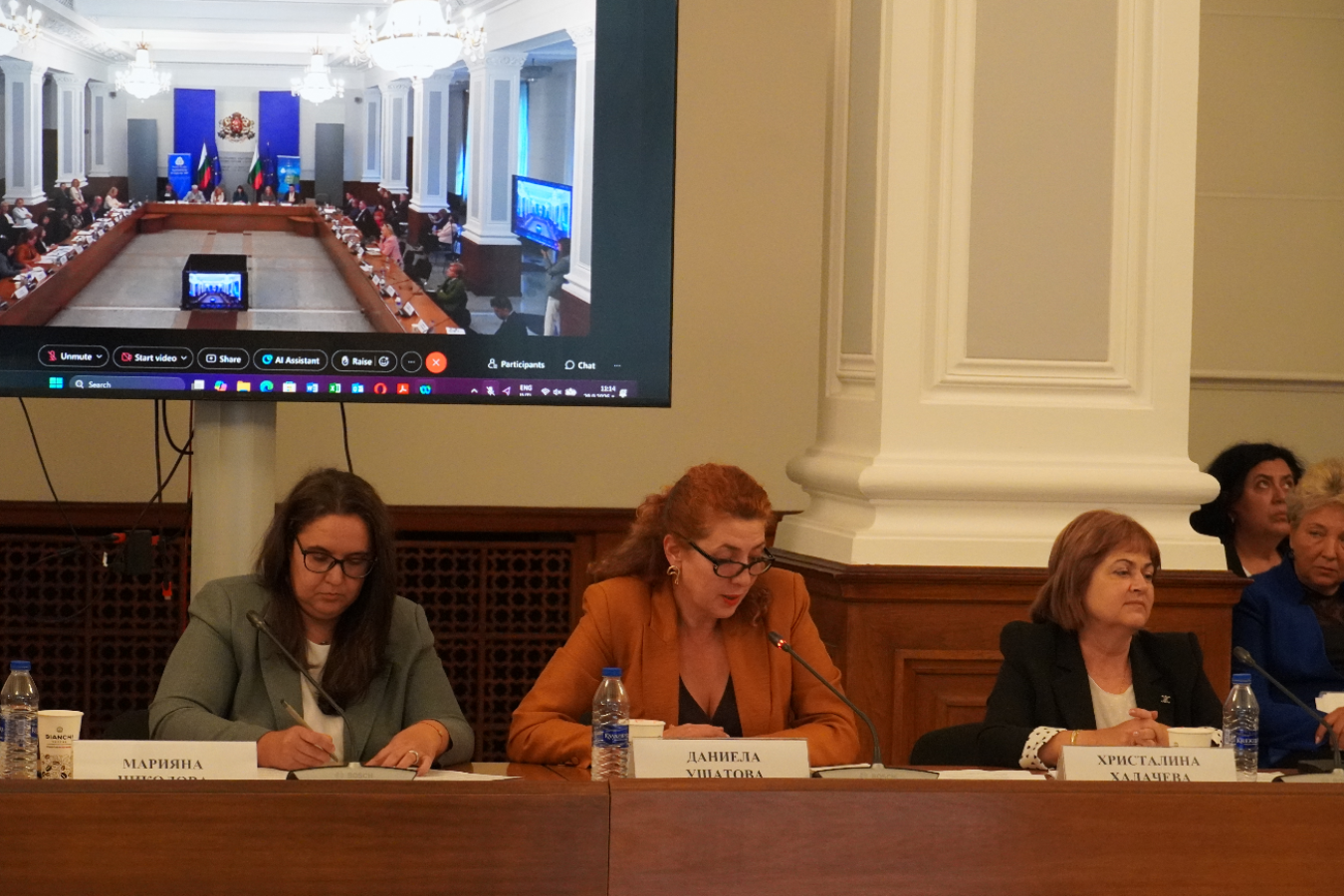
The National Association of Municipalities in the Republic of Bulgaria (NAMRB) supports the debate launched on a comprehensive review and systematisation of social support legislation. The Association is ready to submit specific proposals based on the practical experience of municipalities, which provide a significant share of social services and work with people in vulnerable situations every day.
“It is important to us that the individual remains at the centre of social support. We must not separate social services from social assistance. If we want to improve quality of life, support must combine financial assistance, services for individuals and their families, and a specific expected outcome — employment or another objective set out in the individual plan. The challenge is to find a common approach that allows us not only to calculate the total value of the support received by vulnerable people, but also to measure its outcomes and effects on their independent living and well-being,” said Daniela Ushatova, Head of the Local Policies and Finance Team at NAMRB.
The codification of social legislation must not delay the changes proposed by NAMRB and municipalities to broaden eligibility for the Assistant Support social service. The Association will support the initiatives of the Ministry of Labour and Social Policy and the Economic and Social Council. “We have draft provisions ready to put forward,” the NAMRB representative noted.
This position was presented during the public consultation entitled “Challenges and Risks in the Codification of Social Support Legislation and Its Impact on the Adequacy of Social Benefits”, held on 29 September in the Granite Hall of the Council of Ministers.
Participants included Deputy Prime Minister and Minister of Finance Galab Donev, Minister of Labour and Social Policy Natalia Efremova, President of the Economic and Social Council Zornitsa Rusinova, and representatives of the National Assembly, the European Commission, municipalities, employers’ organisations, trade unions, civil society and institutions responsible for social policy.
Opening the forum, Galab Donev stressed that the person in need of support must be the principal measure of the future reform’s success.
“People must be better informed and protected, and able to access information about their rights and opportunities easily. The future code could transform our vision of social policy — from a system primarily administering benefits into one that delivers support and opportunities,” the Deputy Prime Minister said.
He noted that financial assistance is not always sufficient, as a person may also need a job, training, a social service or support for their family. An individual approach must therefore underpin the future model.
Minister of Labour and Social Policy Natalia Efremova pointed out that social support is currently governed by numerous pieces of legislation. Eight laws alone provide for 59 different types of benefits and measures, in addition to social pensions, supplements and payments regulated by the Social Insurance Code.
“The idea is not simply to bring existing measures together, but to make them coherent and understandable and ultimately create a more logical system. This does not mean mechanically compiling provisions from different laws, but organising the system around the individual,” Efremova emphasised.
She outlined four main objectives for a potential Social Support Code: clarity about citizens’ rights, easier access to support, coordination between institutions and predictability of the public funding required.
“People should not have to understand the system; the system should recognise that they need support and identify what support can be provided,” the Minister said.
Efremova was adamant that codification must not become a tool for restricting the rights of vulnerable people. Its purpose should be to make rights more visible, rules clearer and support more accessible.
“Good social policy is measured not by the number of benefits paid or the number of people reached, but by whether a person has been given an opportunity to change their circumstances,” she stated.
The discussion also addressed the adequacy of funding. According to Eurostat, Bulgaria’s social protection expenditure as a share of gross domestic product remains below the European Union average. Alongside the need for additional resources, a comprehensive review of their allocation is necessary, as increasing individual payments does not in itself guarantee a greater impact on poverty. Benefit levels should be updated periodically, while resources absorbed by overlapping expenditure and administrative procedures should be redirected towards unmet needs.
Zornitsa Rusinova, President of the Economic and Social Council, stressed the importance of broad stakeholder participation in preparing the changes.
“I believe that the views of Bulgarian businesses, trade unions and civil society organisations will provide a sound basis for the codification of social legislation. From this point onwards, we must discuss not only changes to individual parameters, but a comprehensive change of model — towards active support rather than passive social assistance,” Rusinova said.
Participants identified digitalisation and the exchange of information between institutions as essential prerequisites for a more accessible social support system. Future codification must be accompanied by interconnected registers and common data-sharing rules, so that citizens are not repeatedly required to provide information already held by public authorities.
“When the state already holds information about a person, it must be able to use it, rather than turning the citizen into a courier between institutions,” Minister Natalia Efremova said.
She stressed that codification must go hand in hand with digitalisation and effective data exchange. The aim is for institutions to operate as parts of a single system, rather than leaving citizens to determine which law applies, which authority to approach and what documents to submit.
A single point of access also requires a specific coordination mechanism involving the Social Assistance Agency, the Employment Agency, health authorities, municipalities and service providers. Complex cases should have a lead social worker and a shared plan with clear responsibilities and deadlines. This requires investment not only in information systems, but also in sufficient numbers of qualified social workers, training, methodological guidance and manageable workloads.
The issue is particularly important for municipalities, which are among the first institutions people approach when they need help. Daniela Ushatova emphasised that local authorities are major providers of social services and help citizens navigate the complex system of measures and procedures every day.
From the municipalities’ perspective, codification must make the full range of support received by each individual visible. Currently, support is provided in different forms and through different institutions: cash benefits, personal assistance and assistant support, social services, employment measures, and health and education activities. When this substantial public resource is distributed in small portions, at different times and through different channels, people do not perceive it as coherent or sufficient. The future code should therefore bring the separate instruments together into an individual support package, accounting for both its total value and its actual outcomes for the person and their family.
“The state provides a wide range of instruments and forms of support, but they are delivered at different times and by different institutions. To access them, citizens have to complete numerous documents for different authorities. This leaves people feeling that the support they receive is insufficient,” Ushatova noted.
She identified the different arrangements for providing services in the home as one of the most serious practical problems. Support is currently delivered through personal assistance, assistant support, EU-funded projects and the municipal Home Social Care service. Some target groups overlap, while other people in need — particularly older people with multiple disabilities who are unable to care for themselves — remain outside the scope of certain services.
“It would be helpful for municipalities if codification enabled us to ensure that broadly similar services are delivered through a single point of access, under consistent arrangements and with a common funding model,” the NAMRB representative said.
The municipalities’ specific proposal is to analyse the four existing home-based support arrangements according to their functions and bring them together around a common assessment of individual needs. Eligibility for assistant support should be broadened, and access should not depend solely on a formal medical threshold. At the same time, minimum training requirements for assistants, electronic reporting and risk-based checks are needed to curb false reporting of service hours without burdening users and providers who comply with the rules.
Hristalina Halacheva, Secretary of Targovishte Municipality, focused on oversight of personal assistance provision and the need for clear requirements for those employed as personal assistants.
“We support and implement the existing legislation, but in practice we encounter situations that demonstrate the need for much stronger oversight of the funds spent on social services,” Halacheva said.
She noted that the number of personal assistants in the municipality had risen from around 100 to more than 850 over six years. Eight staff members are responsible for overseeing their work, making regular checks of all cases extremely difficult.
“Monitoring and control mechanisms must therefore be given a much clearer place in the legislation,” the Secretary of Targovishte Municipality emphasised.
In her view, minimum requirements for personal assistants are also needed, reflecting their ability to provide the relevant care. She also raised the question of whether a Territorial Expert Medical Commission (TELK) assessment certifying 90% disability and a need for assistance from another person should remain the main criterion for access to personal assistance.
“There are people in need who do not meet this medical criterion, while others meet it but do not actually require the corresponding level of support,” Halacheva noted.
Targovishte Municipality has already submitted proposals to the Ministry of Labour and Social Policy and is ready to contribute its practical experience to the preparation of the changes.
Mariyana Nikolova, Director of the Municipal Social and Health Policy Complex in Troyan, emphasised that municipalities supplement national policies with their own local mechanisms for supporting citizens in different life circumstances.
“Experience shows that people do not come to us because they have a problem with a particular law. They come with a specific need which, in many cases, they cannot even clearly articulate. Municipalities and the local offices of the Social Assistance Agency must identify that need and direct them towards appropriate support,” Nikolova said.
In her view, individually assessed needs should be the main criterion for access to support. Medical assessments should remain an important part of the process, but must not become a formal barrier.
“A medical document does not always provide a complete picture of the support a person needs at a particular moment or of their functional limitations. This is not about automatic entitlement, but about the right to have one’s actual needs assessed,” she noted.
Troyan Municipality has also recorded a substantial increase in the number of personal assistants — from nearly 30 in 2019 to around 450 at present. Alongside the financial implications, this places additional responsibilities on the local administration for organising, monitoring and overseeing the service.
Mariyana Nikolova also stressed the need for more employment opportunities for people with disabilities, enabling them to participate fully in economic and social life.
Social support must remove barriers to employment and reduce the risk of in-work poverty. Taking up employment should not lead to the sudden loss of an entire package of entitlements. A transition period is needed, during which financial assistance is gradually reduced while access to transport, childcare, personal assistance, training and social services is maintained until income becomes stable.
“When we are talking about people’s basic and ongoing needs, meeting them must be guaranteed through predictable and sustainable state funding. Project-based funding has an important role in developing new models and innovations, but support that a person needs on a continuing basis must not depend on it,” Nikolova emphasised.
One of the options discussed for addressing the problems identified was the introduction of a single point of access to the system. Under this proposal, a person would submit one application, after which the competent institutions would verify their eligibility for support through official channels. Citizens would therefore not be expected to know the legislation in advance or determine for themselves which law they should apply under.
Such a model requires interconnected information systems, institutional data exchange and a clear division of responsibilities between state institutions, municipalities and social service providers. Participants also highlighted the possibility of a comprehensive needs assessment to guide individuals towards the appropriate combination of financial support, personal assistance and social services.
The reform must align with the European Pillar of Social Rights and European poverty reduction targets, while taking account of Bulgaria’s institutional arrangements and capacity.
The discussion brought together representatives of the European Commission, the National Assembly, state institutions, municipalities, employers’ organisations, trade unions and civil society. They included Ana Dobre from the European Commission’s Directorate-General for Employment, Social Affairs and Inclusion; Ana Ananieva, Executive Director of the Social Assistance Agency; Konstantin Prodanov, Chair of the parliamentary Budget and Finance Committee; Maria Todorova, Deputy Chair of the Labour, Demographic and Social Policy Committee; and Member of Parliament Ivan Yanev. The forum also presented the findings of a study on personal assistance commissioned by the Ministry of Labour and Social Policy from the Balkan Institute for Labour and Social Policy, alongside the perspectives of Lachezar Bogdanov from the Institute for Market Economics, Desislava Nikolova from the World Bank, and representatives of organisations of people with disabilities and the business community.
The forum highlighted a shared understanding that the future Social Support Code must be developed following a thorough impact assessment and with the active participation of municipalities, which implement a significant share of these policies on the ground. For local authorities, the principal measure of success will not be the number of legislative acts consolidated, but whether the changes deliver easier access, a reduced administrative burden, and timely, sustainable support tailored to individual needs.

png.png "За еврото")
png.png "КАМПАНИИ ПРОЕКТ УСПЕХ")


