

 Facebook
 Вход

 476


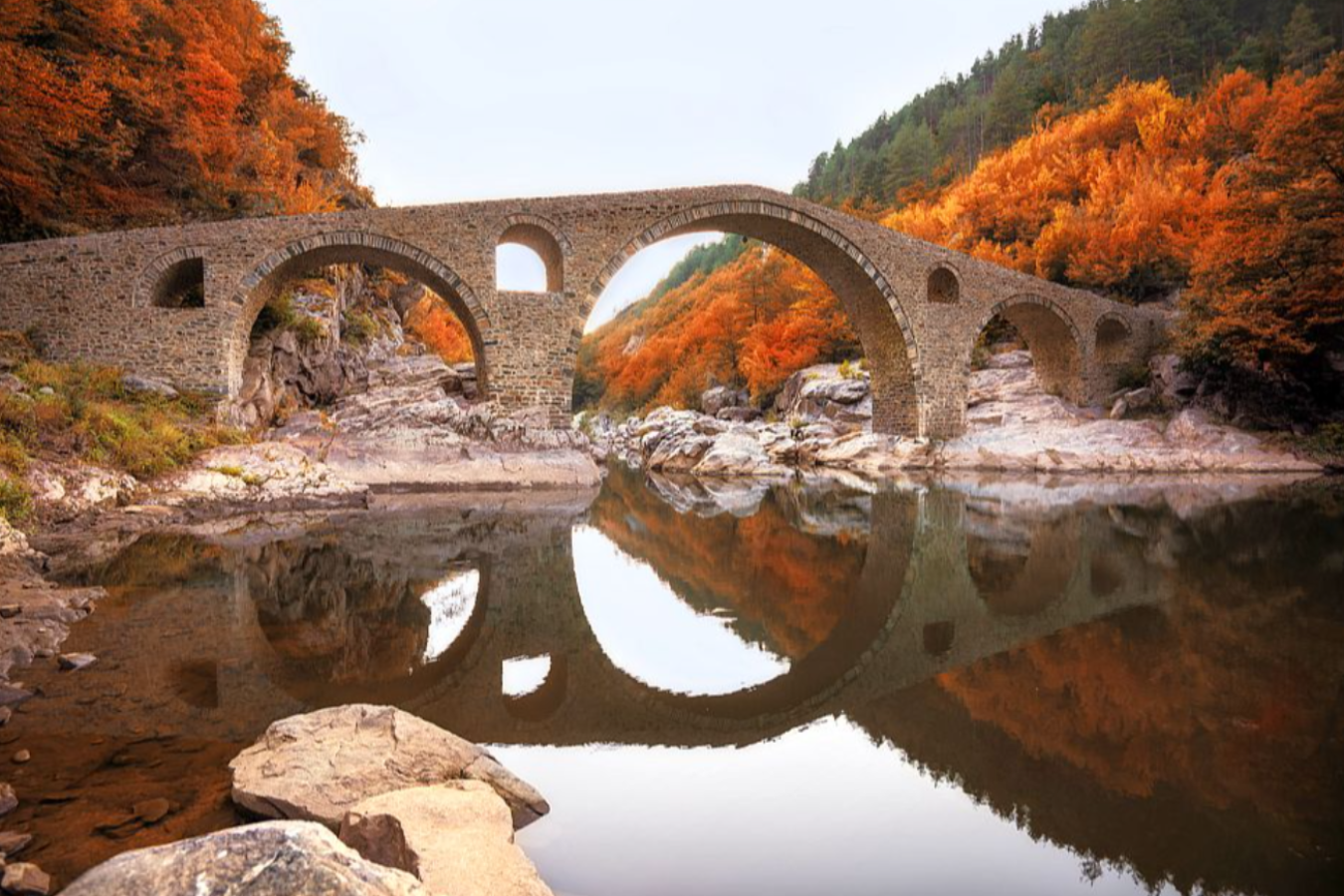
February 24 marked the 40th anniversary of the declaration of the Devil's Bridge near Ardino as an immovable cultural asset of national importance. The municipal leadership has not given up on the idea of including the Devil's Bridge in the list of UNESCO's world cultural and natural heritage, the mayor of Ardino, Eng. Izet Shaban, said on Radio Kardzhali.
In the middle of 20202, he sent a letter to the chairman of the National Commission of the Republic of Bulgaria for UNESCO, in which he pointed out the arguments of the local government and the Initiative Committee of Ardino for the inclusion of the Devil's Bridge in the UNESCO World Cultural and Natural Heritage List at the United Nations.
The bridge was built at the beginning of the 16th century by the order and desire of Sultan Selim I, as part of a road connecting the Upper Thracian lowland with White Sea Thrace and the Aegean Sea. It is assumed that there was a bridge on this site since the Roman era as part of the important ancient road Via Egnatia, connecting the White Sea and Thrace through the Makasa Pass.
Like all mystical places in Bulgaria, this place is also accompanied by a number of legends, says historian and tour guide Georgi Kyuchukov. There are several legends about the Devil's Bridge and they are related to the myth of the embedding of the human shadow and the devil.
One legend tells that the construction of the bridge was not successful and a woman foretold that a human sacrifice was wanted and this should be the first person the builders would meet the next day. They knew it would be their wives bringing them food and warned them not to come early. Only the youngest master failed to do so, and his wife was sacrificed. Legend has it that it was the wife of the youngest of the masters who was carried over as a sacrifice.
According to another legend, the devil made Master Manol a condition to depict his face so that it could be seen and not be seen. Only in this way will the bridge be strong.

png.png "За еврото")
png.png "КАМПАНИИ ПРОЕКТ УСПЕХ")


